Training & Behavior
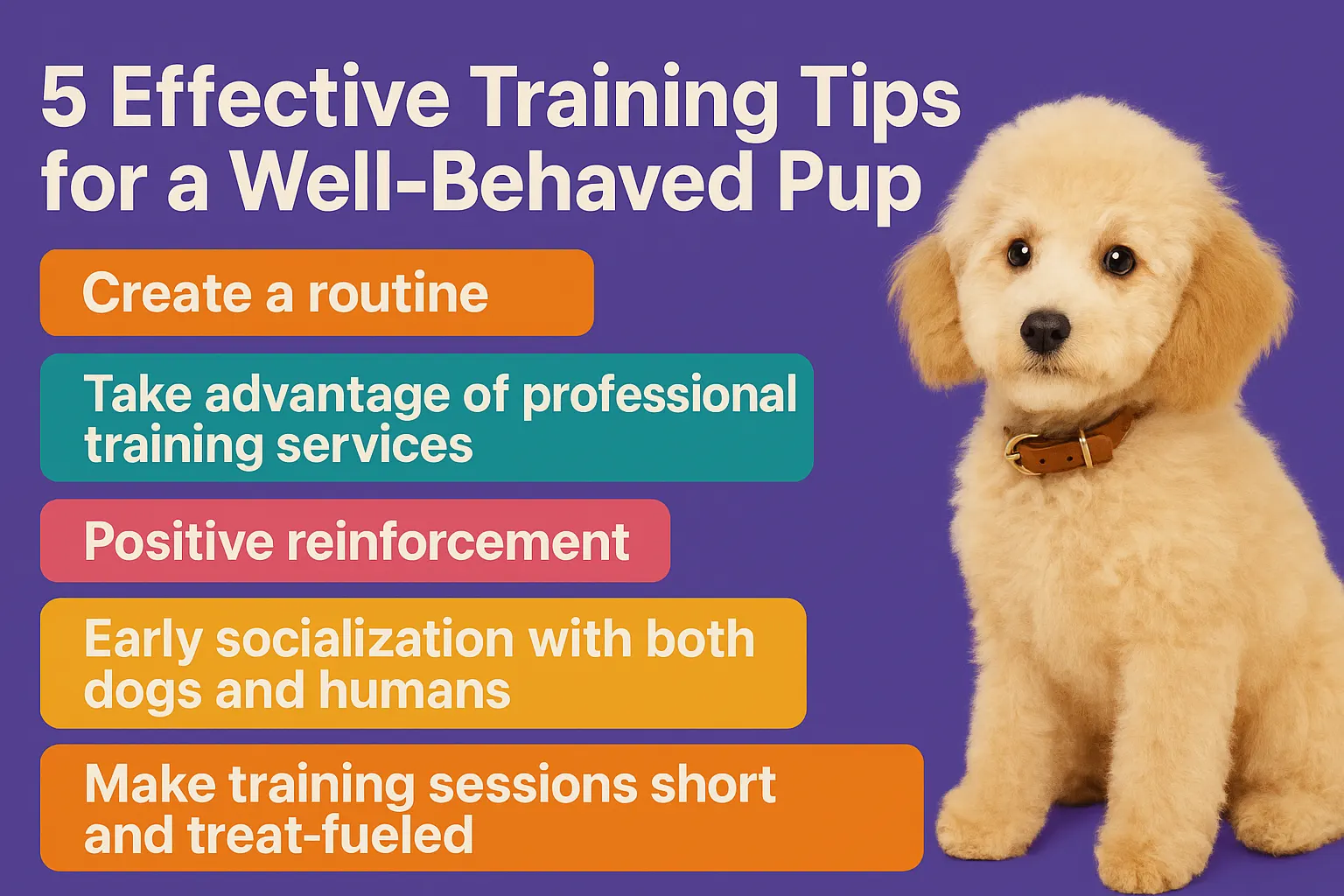
5 Effective Training Tips for a Well-Behaved Pup
By Marko · May 26, 2025 · Updated September 24, 2026
Whether you’re experienced with owning dogs prior to reading this or you’re a brand-new, soon-to-be pup owner, it’s good to be well-informed either way.
Dogs are very complex characters with no one dog being the same. It’s important that you’re aware of the type of dog you’re getting when it comes to the breed and how best to manage them in their early stages of growth and development.
Just like babies, they need nurturing with your help. Here are five effective training tips for a well-behaved pup.
Key Takeaways
- Reward-based training works best for most puppies. A 2020 study of 92 companion dogs found that punishment-heavy training raised stress behaviours and cortisol levels.
- Socialize early. The main window runs from 3 to 14 weeks, and positive exposure to people, dogs, and everyday sounds shapes how a puppy behaves as an adult.
- Reward within a few seconds of the behaviour. A marker word or a clicker helps your puppy connect the reward to the right action.
- Keep sessions to about five minutes a day and stop while your puppy is still enjoying it.
- A steady routine and a qualified reward-based trainer, or a full six-week puppy class, teach more than the occasional long session.

What Will You Learn?
- Create a routine
- Take advantage of professional training services
- Positive reinforcement
- Early socialization with both dogs and humans
- Make training sessions short and treat-fueled
Key Takeaways
- Training works best with a routine, so your poodle knows what to expect each day.
- Reward the behaviour you want, and ignore or redirect the rest.
- Keep sessions short and end on a success, using food or play as a reward.
- Socialisation in the first months shapes how confident the adult dog becomes.
- Professional classes help, but the daily work at home is what sticks.
Create a routine
Creating a routine is important, especially when it comes to a little puppy. They’ll be looking to you for guidance and to be taken through each day and exciting event as it comes. Whether it’s a walk to the park or training them on sleeping in their crate at night, routines are good to have.
That means getting up at the same time every day, where possible, and having a set morning at least to help get them used to the environment and layout of the day according to the household.
Having a good routine will ensure they grow to be obedient and confident dogs within their home, at least.
Puppies settle faster with a schedule they can predict: the same wake-up time, meals, walks, and toilet breaks each day. A steady routine also speeds up house training, because your puppy learns when a toilet break is coming.
Take advantage of professional training services
Professional training is something that is worthwhile to have when you’re training a pup for the first time. Even when you have experience, you’ll want to refresh your knowledge where possible.
Poodles learn fast, which makes training rewarding and also means bad habits set in quickly. Build a daily routine, reward the behaviour you want, and keep sessions short. A few minutes of focused, treat-based practice several times a day beats one long session. Start socialisation early, while the puppy is in its most receptive window.
Look for a trainer who uses reward-based methods. The American Veterinary Society of Animal Behavior recommends reward-based training and advises against methods that rely on fear or pain. Group puppy classes are a good place to start, and finishing a full six-week course works better than dropping in for a session or two. Puppies that attend a class before 20 weeks are less likely to be fearful of everyday things like thunder, vacuum cleaners, and crates.
Positive reinforcement
Positive reinforcement is important when it comes to training a dog because no dog really benefits well from being shouted at for doing something wrong.
They’re not likely to understand you even if you’re shouting, so it’s always good to positively reinforce any training you’re doing with your puppy. Make sure to reward any good behavior, and remember, it’s all about repetitive training sessions. Ultimately, this will help the pup pick up the commands sooner rather than later.
A 2020 study of 92 companion dogs found that dogs trained with aversive methods showed more stress behaviours during training and had higher cortisol levels afterwards than dogs trained with rewards. Timing matters as much as the reward. Give it within a few seconds of the behaviour, or use a marker such as a clicker or a spoken "yes" to mark the exact moment, then treat. Save the highest-value treats, like chicken or cheese, for the hardest tasks, and use ordinary kibble for the easy ones.
Early socialization with both dogs and humans
Socialization is going to help your dog become the best pooch when it comes to meeting other dogs out on walks and socializing with humans of all ages.
The early exposure that your puppy has to socializing with other dogs and all human ages is going to help them be incredibly comfortable in any scenario.
The American Veterinary Medical Association puts the main socialization window at 3 to 14 weeks, and the American Kennel Club extends it to about 16 weeks. Puppies also go through a fear period around 8 to 11 weeks, so keep new experiences calm and let your puppy set the pace. Until your puppy is fully vaccinated, avoid places where unknown dogs gather, such as dog parks and pet stores, and stick to safe spaces and known, healthy dogs.
Make training sessions short and treat-fueled
One thing that’s worth knowing when it comes to training is that the shorter you can keep them, the better. Dogs will often have a short attention span, so keeping the training short but also fuelled with plenty of treats will ensure your pup gets the most out of each session.
Five minutes a day, or a few short sessions spread across the day, teaches more than one long session. End each one with a behaviour your puppy already knows well.
These effective training tips will help any pup go from a rambunctious little one to a well-behaved fur best friend.
Related guides
This article is part of our behaviour and training hub. To go deeper, see poodle puppy training, clicker training and socialising a poodle puppy.
Frequently asked questions
When should I start training my puppy?
As soon as your puppy comes home, usually around 8 weeks old. Puppies can start learning their name, a sit, and a toilet routine from the first day. Keep sessions short and reward the behaviour you want to see again.
How long does it take to train a puppy?
Basic skills can appear within a few weeks, but reliability takes months. Training continues through a puppy's first year as their attention span and self-control grow. Short daily sessions teach more than one long session.
Are treats just a bribe?
No. A reward given within a few seconds of a behaviour tells your puppy which behaviour earned it. Once a behaviour is reliable, you can use praise, play, or a toy for most repetitions and keep food for new or difficult tasks.
Can I socialize my puppy before the vaccinations are finished?
Yes, with care. The main socialization window runs from 3 to 14 weeks, which ends before the vaccination series does. Carry your puppy in public, invite healthy vaccinated dogs to a clean space, and avoid places where unknown dogs gather, such as dog parks.
Sources
- American Veterinary Medical Association. Socialization of dogs and cats.
- American Kennel Club. Puppy Socialization: Why, When, and How to Do It Right.
- American Kennel Club. 4 Tips for Training Your Dog With Rewards.
- American Veterinary Society of Animal Behavior. Reward-based training methods.
- Vieira de Castro, A. C., et al. (2020). Does training method matter? Evidence for the negative impact of aversive-based methods on companion dog welfare. PLOS ONE.