Did you know a “Black” Poodle puppy might turn Blue by age 2? Or that a “Sable” puppy could fade to Cream?
Poodle colors are a genetic masterpiece. Unlike most breeds, Poodles carry the “Progressive Graying” (G Locus) gene, meaning their coat color is a moving target. What you see at 8 weeks is rarely what you get at 2 years.
In this guide, we break down the 13+ recognized colors, the controversial “bad boy” patterns (Merle/Brindle), and the science behind the coat.
Quick Genetics: Why Poodles Change Color
Before you pick a color, you need to understand the Two Rules of Poodle Color:
- The Fading Rule: Most Poodles carry the fading gene. A deep “Chocolate” puppy often clears to a “Cafe Au Lait” (latte color). A “Black” puppy might clear to a “Blue” or “Silver.”
- The Skin Rule: A true color is defined by the skin pigment, not just the fur.
- Black-Nosed Dogs: Black, Blue, Silver, White, Cream, Red, Apricot.
- Liver-Nosed Dogs: Brown, Cafe Au Lait, Silver Beige.
1. The Solid Colors (The Classics)
These are the official colors recognized by the AKC (American Kennel Club).
The Black Poodle
True Black is ink-black to the skin. It does not fade, silver, or blue.
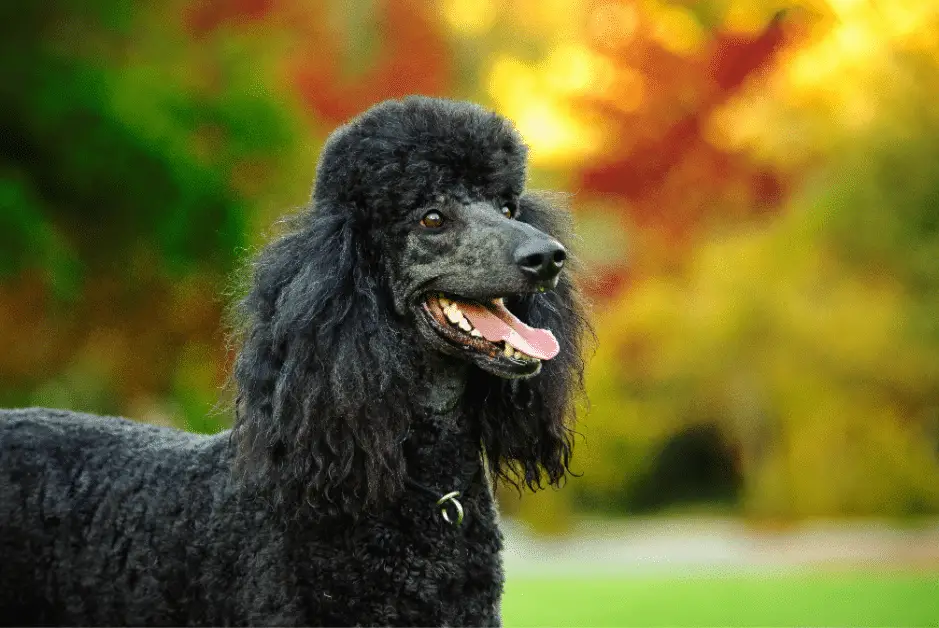
- Genetics: Dominant Black (
KB) gene. - How to tell: Check the shaved face. If it’s jet black at 6 weeks, it’s a true black.
The White Poodle
True White is snowy white with jet black points (nose, lips, eye rims).
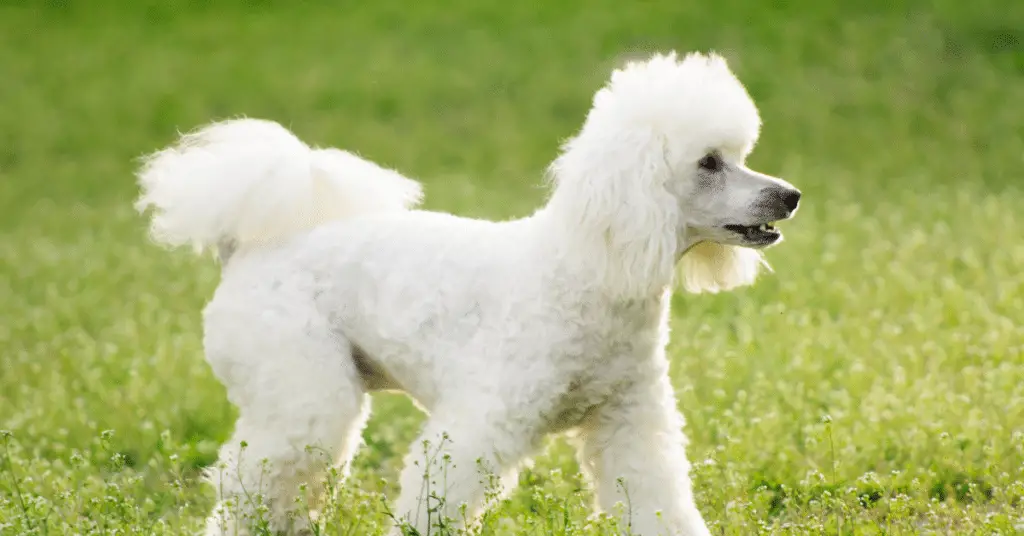
- Warning: A “White” Poodle with a pink nose or blue eyes is incorrectly pigmented and may be deaf (albino traits).
The Brown Family (Chocolate, Cafe, Silver Beige)
All brown Poodles have liver noses and amber eyes. They never have black pigment.
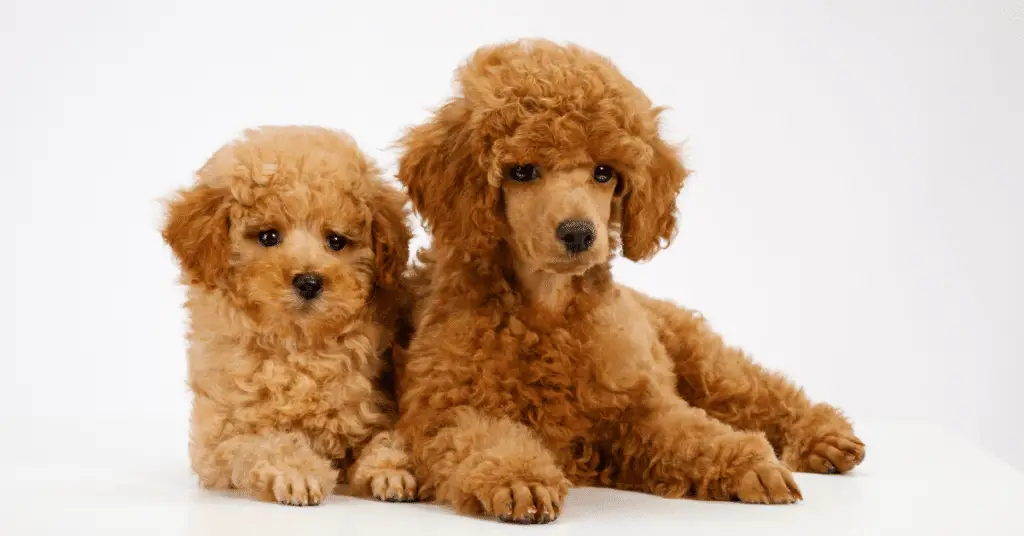
- Brown: A deep, rich chocolate color.
- Cafe Au Lait: Born brown, but fades to the color of a coffee-with-milk by age 2.
- Silver Beige: The rarest brown. Born brown, but clears to a pale, silvery-mushroom color.
The Blue & Silver Poodles
These are “Faded Blacks.” They are born black but carry the Progressive Graying gene.
- Silver: The most dramatic change. They have silver faces when shaved at 6 weeks. By age 2, they look platinum.
- Blue: A slow fade. They look black until age 2 or 3, then settle into a dark, gunmetal slate color.
The Red Spectrum (Red, Apricot, Cream)
These colors are all genetically related (ee Recessive Red).
- Red: A deep mahogany “Rufus” color. Note: Reds often fade to Apricot as they age.
- Apricot: A sunny, golden orange.
- Cream: A dilute, cool-toned blonde (often mistaken for Apricot).
2. The Patterned Colors (The “Party” Animals)
These patterns are caused by the A-Locus (Agouti) gene. They are stunning but often considered “mismarks” in the strict show ring (except for UKC).
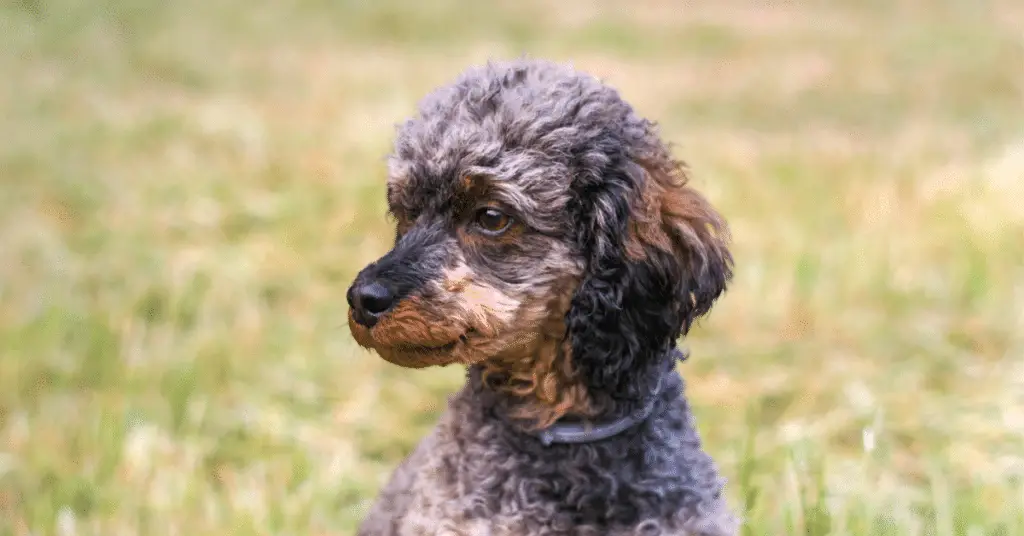
Phantom Poodle
The “Doberman” Look.
A solid base color (Black, Brown, Red) with clearly defined “pips” of a lighter color above the eyes, on the chest, and legs.
Parti Poodle
The “Cow” Print.
A dog that is more than 50% White with patches of another color.
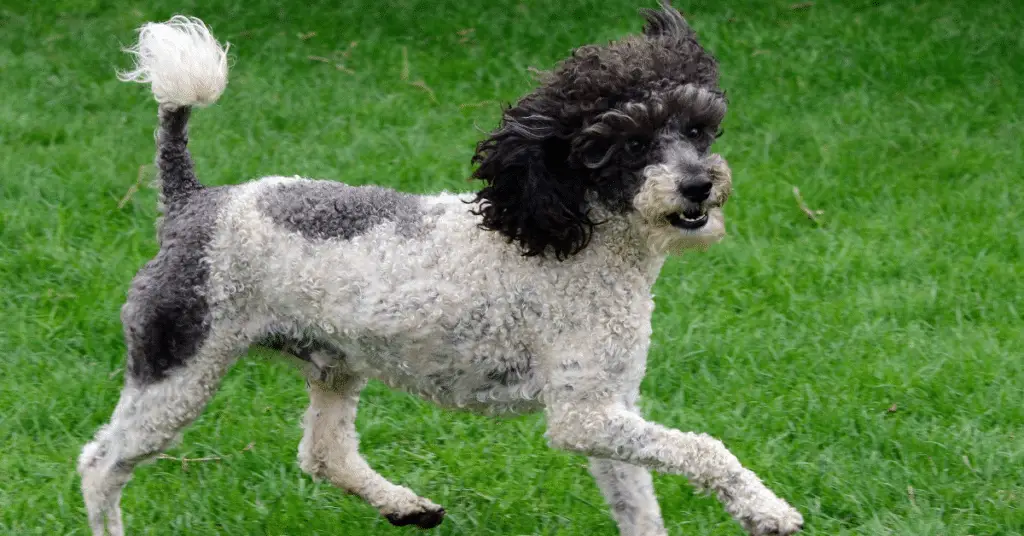
- Genetics: Recessive
spgene. Both parents must carry the gene to produce a Parti puppy.
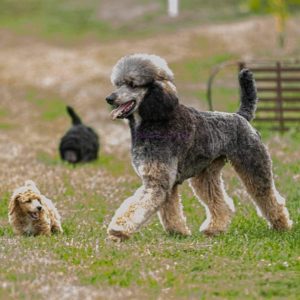
Sable vs. Brindle
- Sable: Lighter hairs with black tips (like burnt toast). Warning: Sables often “clear” to solid Cream or Apricot when shaved!
- Brindle: Tiger stripes all over the body. This is a distinct
kbrgene.
3. The Controversial Color: Merle
“I saw a Poodle with blue eyes and leopard spots.”
That is a Merle.
- The Truth: The Merle gene does not naturally occur in purebred Poodles. It was introduced by crossing with Australian Shepherds.
- The Health Risk: Breeding two Merles together creates “Double Merles”—puppies often born blind, deaf, or without eyes.
- Our Stance: Merle Poodles are beautiful but controversial. They are not recognized by the AKC. If you buy one, ensure the breeder health tests and never breeds two Merles together.
FAQ: Rarity & Value
What is the rarest Poodle color?
Silver Beige and Blue are increasingly rare due to the specific recessive genetics required. A true Red that holds its color is also highly prized.
Which color is the most expensive?
Phantom, Red, and well-marked Parti Poodles often command higher prices ($3,000+) due to demand. Merles are often sold for $4,000+ despite being mixed-breed in origin.
Do Poodle colors affect temperament?
No. A Black Poodle is just as smart as a White Poodle. The only exception is that Red/Apricot lines were historically kept separate, so some owners claim they have a slightly more “mellow” temperament, but this is anecdotal.